Solar Sparks in Cambridge
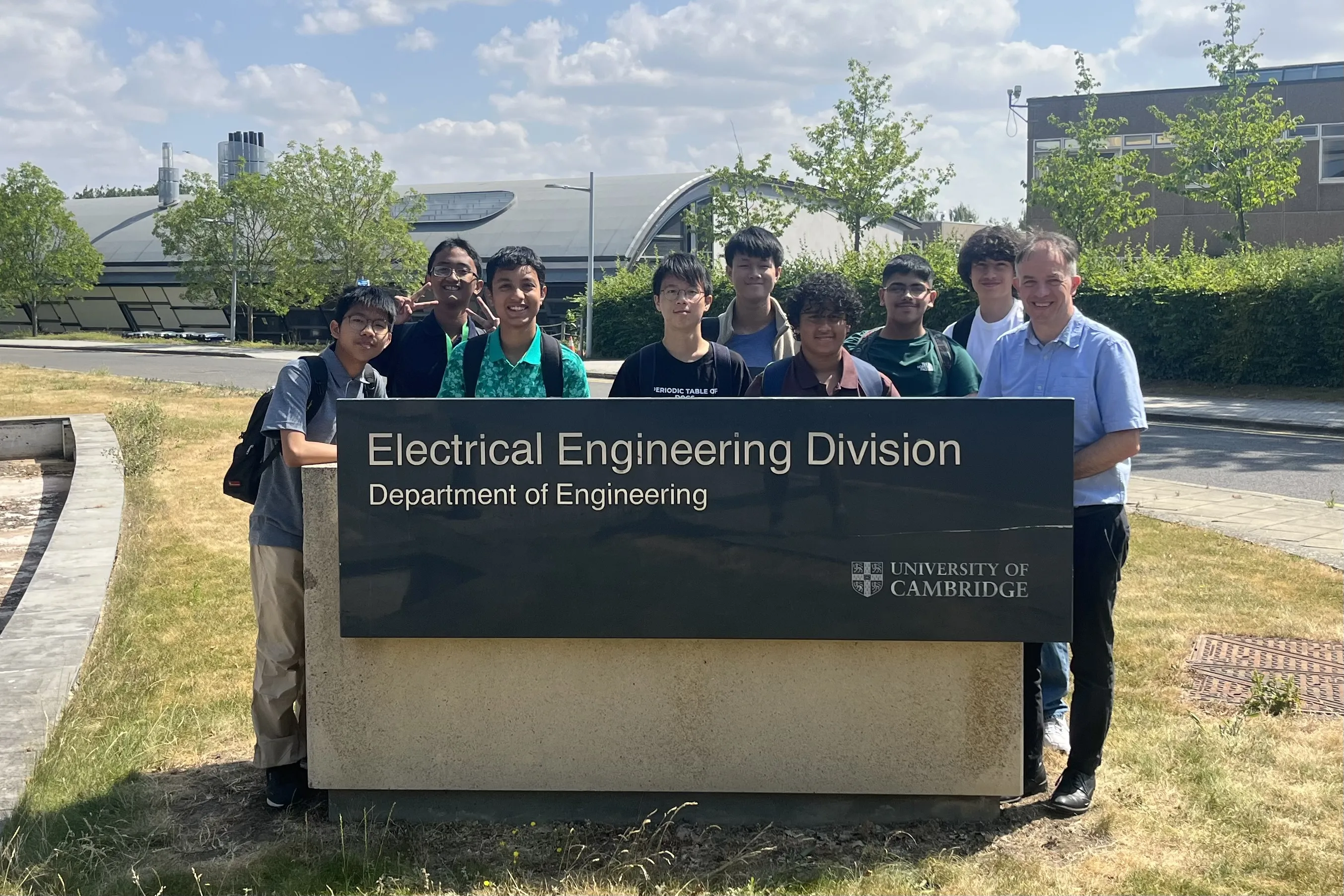
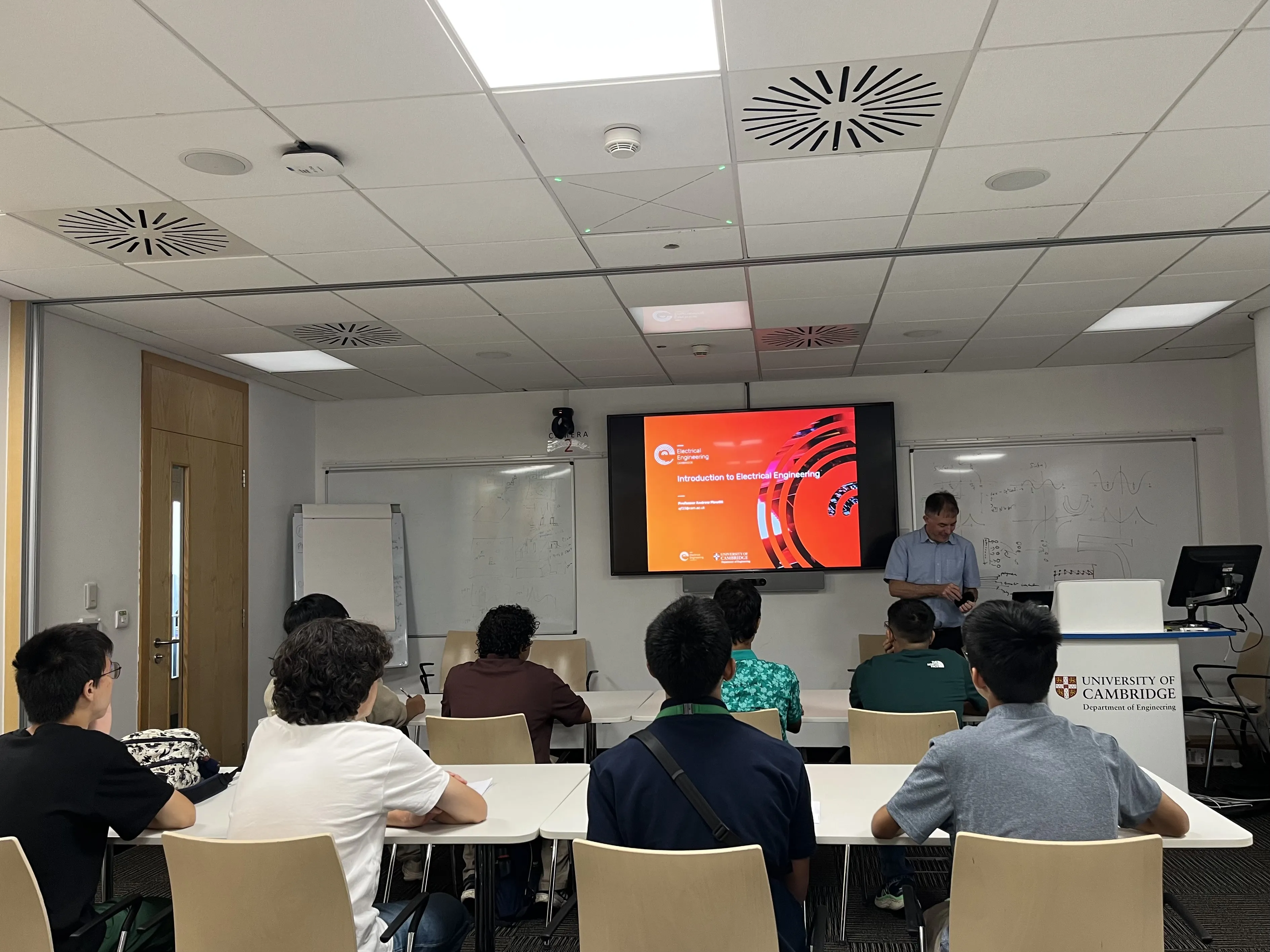
On Wednesday 15 July, Solar Sparks (a team of eight Year 10 students researching transparent flexible solar cells) visited the Cambridge Electrical Engineering division, where they met Professor Flewitt, head of the division, and Dr Kham Niang, a post doctorate researcher at Cambridge, to take a tour of the facilities at the site. They went to listen to a university-style lecture on the basics of electrical engineering by Professor Flewitt, as well as the research they do, followed by a tour of the clean rooms. The team also discussed a level options and university choices with the professor as well.
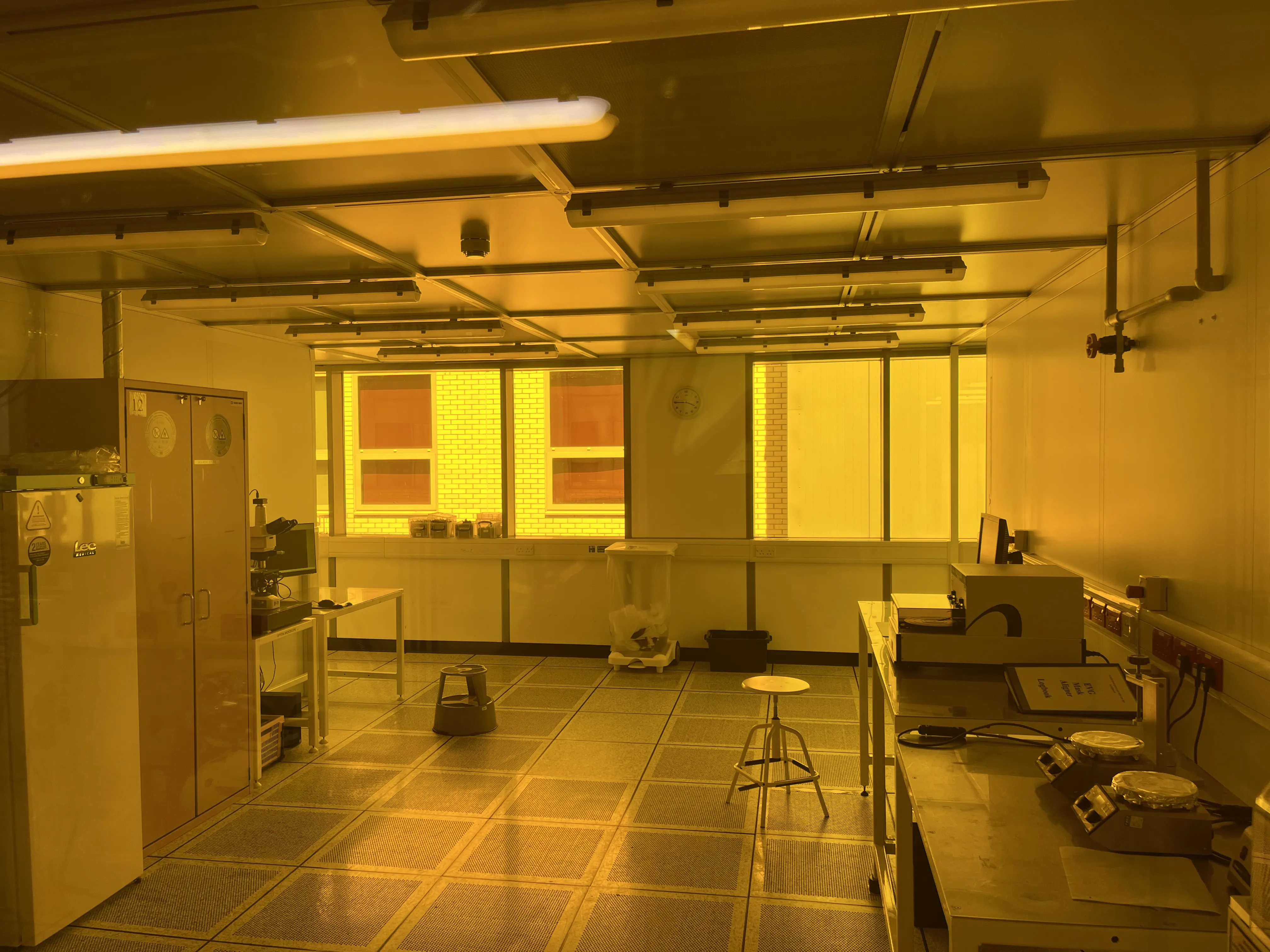
These are the rooms in which the cutting-edge research is done, and where all the state-of-the-art machinery is kept. The department keeps these rooms extremely clean, hence the name, by utilizing huge HEPA filters and vents on both the floors and ceilings. All these precautions are made because even a single dust particle can introduce unwanted impurities in the immensely precise work that they do.
The team run by Professor Flewitt specialises in thin film metal oxide deposition (which is one of the main steps in the process to make transparent flexible solar cells), with the ultimate goal of being able to make electronics so thin, that they are flexible and can be put in clothes and recyclable packaging. They aim to be able to make this packaging be able to tell you when the food inside has gone bad, as usually the best by dates on packaging are hugely overestimated for the sake of safety. Professor Flewitt explained that we are increasingly moving away from the metal bricks in our pockets that we call phones, and more into wearable electronics, with the rise of smart glasses, smart watches and smart rings. He believes the next step in this is electronics in clothes.
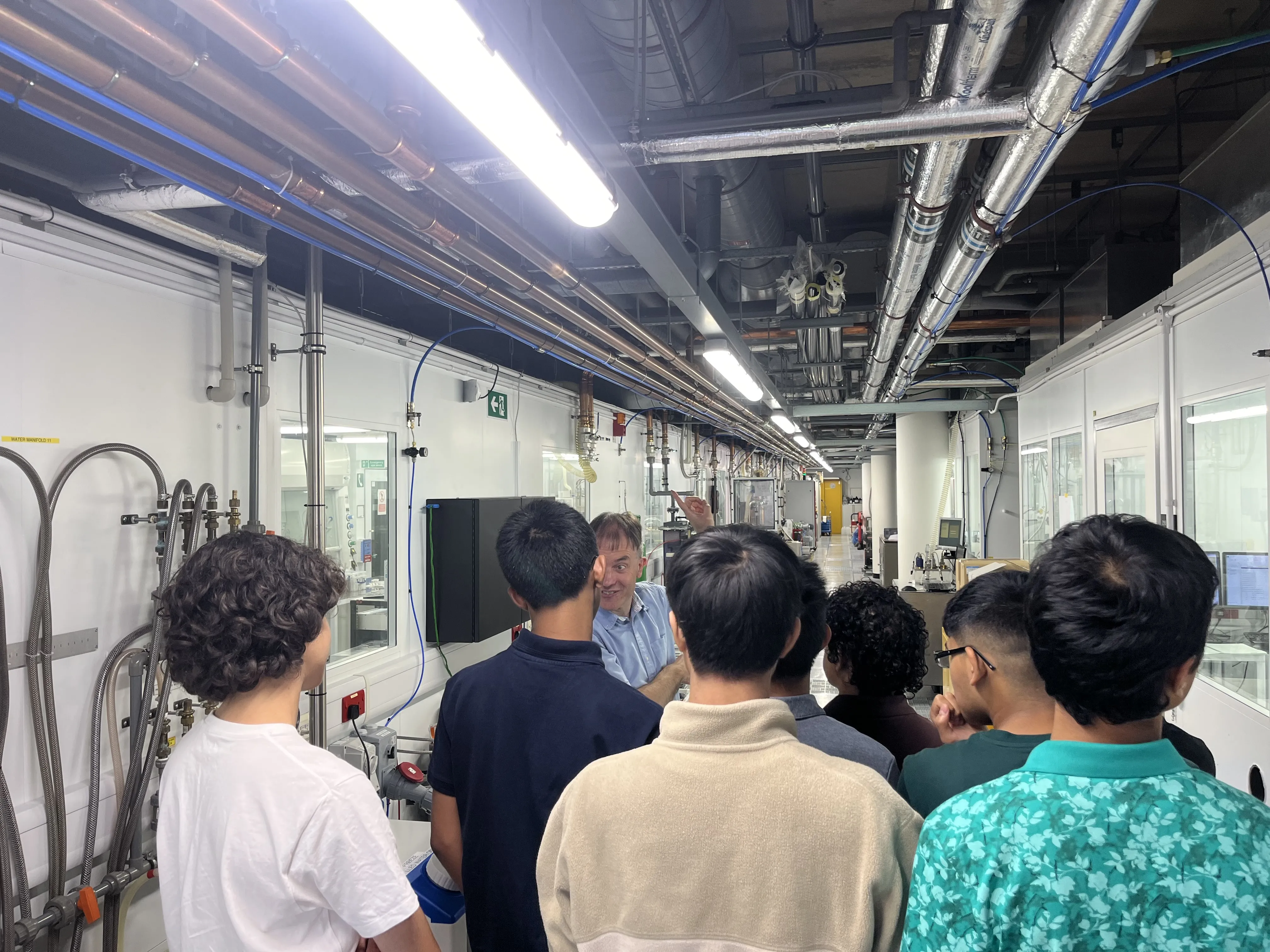
The team got to see some of the machines they use to do this, like their HISPUT machine, which vaporises a metal by combining it with argon, and then deposits it in a process called sputtering, and also their ARD, which uses an organic, zinc containing metal that is then processed such that the zinc is deposited in a thin film, and the organic material surrounding it is decomposed. Not only that, but the team was able to hold some prototypes they had already made, as well as see a working device being tested.
Above all, the team learnt a lot of new things about thin film deposition, which is instrumental in fabricating flexible electronics like the electrodes and other layers in a flexible solar cell.
Of course, we must not forget to thank Mr Straw and Professor Flewitt for giving up their time and putting so much effort into making this trip possible for us. Not only that, but none of this would also have been possible without Dr Welby, who supervises our project and who organised the trip.